
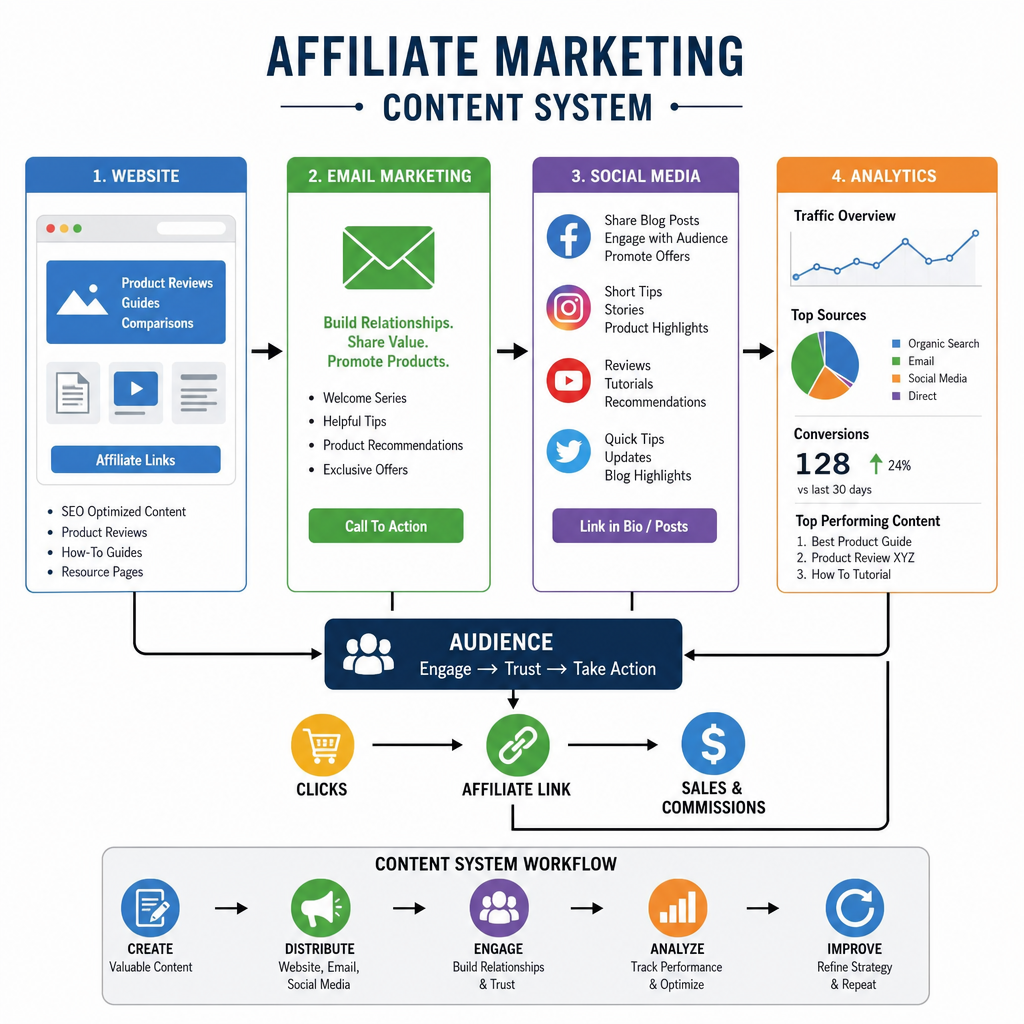
Maximizing Your passive income with Affiliate Marketing
Affiliate marketing is a practical way to build online income by recommending products, services, or tools and earning commissions when your audience takes action through your links. It is not automatic money, but with the right digital marketing foundation, trustworthy content, and consistent optimization, it can become a durable passive income stream over time. This guide explains how affiliate marketing works, how to choose affiliate programs, and which marketing strategies can help you promote products without sounding pushy.
Is affiliate marketing legit?
Yes, affiliate marketing is legit when it is done transparently, ethically, and with a real focus on helping people make better buying decisions. Brands use affiliate programs to reward creators, publishers, influencers, and marketing partners for sending qualified traffic or sales, while affiliates earn commissions for the value they help create. The problems usually begin when people treat affiliate marketing like a shortcut, hide relationships, promote low-quality offers, or use misleading claims.
At its best, affiliate marketing sits at the intersection of content, trust, and performance. You recommend something useful, your audience decides whether it fits their needs, and the brand pays you if that recommendation leads to an approved result. That result may be a sale, signup, lead, subscription, app install, or other tracked action depending on the program.
The key is to approach affiliate marketing like a long-term business, not a quick trick. A strong affiliate earns attention before asking for a click, explains who a product is best for, and makes disclosure part of the user experience. That honesty is not just good practice; it is also what keeps your audience coming back.
The real meaning of passive income in affiliate marketing
Passive income does not mean income with no effort. In affiliate marketing, it usually means you create assets once, such as articles, videos, email sequences, comparison guides, tutorials, or social posts, and those assets can keep working after the initial work is done. The income becomes more passive as your content library grows, your search visibility improves, and your recommendations keep matching buyer intent.
A blog post reviewing a tool, for example, may keep attracting readers long after publication if it answers a specific question well. A YouTube tutorial may continue sending traffic to an affiliate link for months. A short-form video may generate sales quickly if it reaches the right audience, but it may also need frequent posting to maintain momentum.
This is why the word “maximizing” matters. The goal is not just to place links online. The goal is to build a system where content, audience trust, affiliate networks, and conversion-focused marketing techniques work together.

How affiliate marketing works behind the scenes
Affiliate marketing is powered by tracking. When you join an affiliate program, you receive a unique link, code, or tracking method. When someone clicks that link and completes the required action within the program’s tracking window, the sale or lead can be attributed to you.
A basic affiliate system usually includes:
- The merchant or brand: The company selling the product, service, course, software, or subscription.
- The affiliate: The person or business promoting the offer.
- The customer: The person who clicks, evaluates, and buys or signs up.
- The affiliate platform or network: The system that tracks links, reports results, and often handles payouts.
- The content channel: The place where the recommendation appears, such as a blog, newsletter, TikTok account, YouTube channel, podcast, or niche website.
Affiliate networks make the process easier because they gather many affiliate programs in one place. They may provide dashboards, performance data, promotional materials, payment management, and tracking links. Direct affiliate programs can also be valuable, especially when a brand has a strong product fit for your audience.
Your job is not simply to drive clicks. Your job is to connect the right offer with the right person at the right point in their decision journey. That is where smart digital marketing becomes essential.
Choosing a niche that can actually generate income
A profitable niche combines audience demand, product availability, content opportunities, and personal credibility. You do not need to be the world’s top expert, but you do need enough understanding to explain options clearly and help people avoid poor decisions.
Good affiliate niches often solve urgent or recurring problems. People spend money when they want to save time, reduce risk, improve health, grow a business, learn a skill, look better, travel smarter, manage money, or enjoy a hobby more deeply. If your niche has products people already research online, you have room to build content around those searches.
Before committing to a niche, ask yourself:
- Does the audience have a clear problem or desire? Vague interest is harder to monetize than a specific need.
- Are there quality products to recommend? A niche with weak offers can damage trust.
- Can I create many helpful content pieces? One article or one video is rarely enough.
- Is there buyer intent? Look for questions such as “best,” “review,” “alternative,” “how to choose,” and “worth it.”
- Can I build authority over time? Your experience, research, examples, and consistency all matter.
A narrow starting point is often better than a broad one. “Fitness” is huge and competitive. “Home strength training for busy parents” is more specific. “Digital marketing” is broad. “Email marketing tools for solo consultants” gives you clearer content angles and affiliate opportunities.
Building trust before you promote products
Trust is the currency of affiliate marketing. Without it, even high traffic may produce weak results. With it, a modest audience can become highly responsive because readers or viewers believe your recommendations are thoughtful.
Start by being honest about what you know and what you have not personally tested. If you have used a product, explain the context. If you have researched it but not used it, say so and focus on publicly available features, use cases, and decision factors instead of pretending to have firsthand experience.
A trustworthy affiliate recommendation usually includes:
- Who the product is best for
- Who should probably skip it
- What problem it solves
- What tradeoffs the buyer should consider
- How it compares conceptually with other options
- What to check before buying
- Why you are recommending it
This style does more than protect your reputation. It also attracts better-qualified clicks. When people understand the fit before they click, they are more likely to convert and less likely to feel misled.
Marketing strategies that support long-term affiliate growth
The strongest affiliate marketers do not rely on one channel forever. They build a mix of search, social, email, and community touchpoints so their income is not dependent on a single platform or algorithm. You can start with one channel, but your long-term plan should include owned assets and repeatable systems.
Search-focused content
Search content is one of the most reliable paths to passive income because people are actively looking for answers. Blog posts, buying guides, tutorials, reviews, and comparison articles can match high-intent searches. The best pieces are not thin summaries; they help readers understand how to choose.
Useful search content includes:
- “Best tools for” articles that explain selection criteria
- Product reviews that cover use cases and limitations
- Comparison posts for readers choosing between options
- Tutorials showing how to solve a problem with a tool
- Beginner guides that introduce a category before recommending products
Search-focused affiliate marketing works best when your content is genuinely better than a list of links. Add examples, decision frameworks, screenshots if appropriate, and plain-language explanations. Make the reader feel more confident, not more confused.
Email marketing
Email gives you a direct relationship with your audience. Instead of hoping someone returns to your website or sees your next social post, you can deliver useful content to their inbox. This is especially powerful for affiliate campaigns that require education before conversion.
Your email list can include welcome sequences, product education, seasonal recommendations, resource roundups, and tutorials. The important part is to avoid turning every message into a pitch. If subscribers receive practical value regularly, they are more likely to trust the occasional affiliate recommendation.
Social media and short-form video
Social platforms can create fast awareness and help people connect with your personality. Short videos, carousels, live demos, quick tips, and behind-the-scenes content can all promote products naturally when they begin with a real problem.
For example, instead of saying, “Buy this tool,” you might show how to organize a workflow, edit a video faster, plan meals, pack for a trip, or compare product features. The product appears as part of the solution. That approach feels more helpful and often performs better because it begins with audience intent.
Community and personal brand
Communities, whether on private groups, forums, newsletters, or social platforms, give you a place to learn what your audience actually needs. Pay attention to repeated questions. Those questions can become articles, videos, lead magnets, and affiliate campaigns.
A personal brand does not require oversharing. It means people recognize your perspective, trust your judgment, and understand what kind of problems you help solve. That recognition makes affiliate marketing more resilient.
What makes influencer affiliate marketing different?
Influencer affiliate marketing combines audience trust with performance-based compensation. Instead of paying only for exposure, brands can reward influencers for tracked results, while influencers gain a way to monetize recommendations beyond flat sponsorship fees. This model works especially well when the creator’s audience is engaged, niche-specific, and used to taking action on practical recommendations.
Traditional affiliate content often lives on blogs, review sites, newsletters, and search-driven pages. Influencer affiliate content may happen through TikTok videos, Instagram Stories, YouTube descriptions, livestreams, creator storefronts, or community posts. The content is usually more personality-driven, visual, and immediate.
This is also why phrases such as influencer affiliate marketing brand careers, affiliate marketing influencer marketing careers, and affiliate marketing influencer marketing tiktok shop careers are showing up in career-related searches. Brands need people who understand both creator relationships and performance marketing. Creators need managers, strategists, and specialists who can structure campaigns, evaluate offers, track results, and keep partnerships compliant.
For brands and creators, the strongest affiliate influencer partnerships are built on alignment. The product should fit the creator’s content, the audience should have a real reason to care, and the campaign should allow the creator to communicate in their own voice. Forced scripts usually weaken trust.
The rise of affiliate and creator commerce roles
Affiliate marketing is no longer limited to bloggers placing links in articles. It now overlaps with influencer marketing, creator commerce, social selling, livestream shopping, and platform-specific marketplaces. That shift has created more specialized work for people who understand content, partnerships, analytics, and conversion.
Someone searching for an affiliate influencer partnerships marketing specialist contract may be looking for a contract role that manages creator outreach, affiliate setup, reporting, and campaign coordination. A phrase like affiliate influencer partnerships marketing tiktok shop specialist contract suggests an even more specific role focused on TikTok Shop, creator partnerships, product promotion, and affiliate performance. These roles can vary widely by company, but they generally sit between digital marketing, partnerships, and creator management.
Common responsibilities in this area may include:
- Recruiting creators or affiliates who match the brand’s audience
- Coordinating product seeding or campaign briefs
- Setting up tracking links, codes, and affiliate dashboards
- Reviewing content for brand fit and disclosure requirements
- Monitoring clicks, conversions, revenue, and commission performance
- Testing new creator segments, offers, hooks, and content angles
- Communicating with affiliates so they have the assets they need
For individuals, these careers can be a natural path if you enjoy relationship-building and data. For brands, hiring or contracting this skill set can turn scattered creator activity into a more organized revenue channel.
Affiliate programs and networks are not all equal
The affiliate programs you choose will shape your results. A generous commission may look attractive, but it is not enough on its own. The product must convert, the brand must be trustworthy, and the offer must match your audience’s needs.
When evaluating affiliate programs, look at the full picture:
- Product quality: Would you feel comfortable recommending it to someone you respect?
- Audience fit: Does the offer solve a problem your audience already has?
- Commission structure: Is the payout worth the effort required to promote it?
- Cookie or tracking window: Is there enough time for a buyer to decide?
- Conversion path: Is the landing page clear, credible, and easy to use?
- Refund or cancellation rules: Could approved commissions be reversed later?
- Affiliate support: Does the brand provide assets, guidance, or responsive communication?
- Payment reliability: Are payout terms clear and reasonable?
Affiliate networks can be helpful because they provide access to many merchants. However, more choice can also create distraction. Do not join every program you see. Start with a small set of offers you understand well, then build content around them with intention.
Practical marketing techniques for better conversions
Traffic matters, but conversion quality matters more. A small number of highly qualified visitors can outperform a large audience that is only casually interested. The best marketing techniques help people move from curiosity to confidence.
Match content to buyer intent
Not every reader is ready to buy. Some are just learning, some are comparing, and some are looking for reassurance before making a decision. Your content should match these stages.
For early-stage readers, create educational guides and problem-solving content. For comparison-stage readers, explain options, features, tradeoffs, and selection criteria. For decision-stage readers, use reviews, checklists, tutorials, and direct recommendations.
Use clear calls to action
A good call to action tells the reader what to do next and why. Instead of vague language, connect the action to a benefit. For example, “Check the current plan options” is clearer than “Click here.” “See whether this tool fits your workflow” sounds more helpful than a hard sell.
Place affiliate links where they make sense. A link after a useful explanation often performs better than a random button at the top of a page. Context builds confidence.
Create comparison content responsibly
Comparison content can convert well because readers are already evaluating choices. But it must be fair. If you only praise the product with the highest commission, readers will notice.
A useful comparison explains who each option is for, what the tradeoffs are, and which decision factors matter most. You can still recommend one option, but the recommendation should follow logically from the analysis.
Refresh older content
Affiliate content can lose effectiveness when products change, links break, screenshots become outdated, or better alternatives appear. Regular content updates protect both income and user experience. Review your top-performing pages and posts on a schedule, especially those that drive clicks or commissions.
Updates may include replacing broken links, improving introductions, adding clearer pros and cons, expanding thin sections, changing calls to action, or removing weak offers. Sometimes a small improvement to an existing page is more valuable than publishing something new.
How do you promote products without losing credibility?
You promote products credibly by making the audience’s best interest more important than the commission. That means recommending only relevant offers, disclosing affiliate relationships, explaining tradeoffs, and giving people enough information to decide for themselves. The more balanced and useful your content is, the less it feels like advertising.
Think of yourself as a guide, not a salesperson. A salesperson may push the product. A guide helps the reader understand whether the product is right for their situation. That difference changes the tone of your content.
Use language that reflects real decision-making. Instead of saying every product is “perfect,” explain where it works best. Instead of promising effortless results, explain what the user still needs to do. Instead of hiding drawbacks, mention limitations that matter.
Here is a credibility checklist to use before publishing affiliate content:
- Have I clearly identified who this product is for?
- Have I mentioned any meaningful limitations or considerations?
- Is my affiliate disclosure easy to notice and understand?
- Does the content provide value even if the reader does not click?
- Are my claims realistic and supportable?
- Is the recommendation relevant to the page topic?
- Would I still be comfortable with this content if there were no commission?
This approach may feel slower at first, but it builds a stronger foundation. Readers who trust your judgment are more likely to return, subscribe, share, and buy through your links in the future.
Invisible, subtle, and “invisiblr” strategies that actually help
Some people search for affiliate marketing invisiblr strategies, likely meaning invisible or subtle strategies that generate income without aggressive selling. The ethical version of this idea is not hiding affiliate relationships. It is making your recommendations feel naturally integrated because they genuinely belong in the content.
Subtle affiliate marketing works when the product is part of the solution rather than the entire message. A tutorial can mention the tool used to complete a task. A packing guide can include items that solve specific travel problems. A business workflow article can recommend software at the point where the reader understands why it matters.
Helpful subtle strategies include:
- Contextual links: Place links inside explanations where the product is directly relevant.
- Resource pages: Curate tools you actually believe are useful for your audience.
- Tutorial-based recommendations: Show the product in action as part of a process.
- Email sequences: Teach a concept over several messages before recommending a solution.
- Content upgrades: Offer checklists or templates that naturally connect to relevant tools.
- Internal linking: Guide readers from educational content to buying guides when they are ready.
The line you should not cross is concealment. Subtle does not mean secret. Your audience should understand when you may earn commissions. Transparency protects trust and makes your business more sustainable.

A simple framework for building your affiliate income engine
You do not need a complicated system to begin. You need a repeatable process that helps you choose offers, create content, capture attention, and improve results. Start small, then refine based on performance.
Use this framework as a practical starting point:
- Pick one audience segment. Define who you are helping and what problem they want solved. A specific audience makes content easier to create and offers easier to evaluate.
- Choose three to five relevant affiliate programs. Focus on quality and fit rather than quantity. Learn each offer well enough to explain it clearly.
- Map content to the customer journey. Create educational, comparison, and decision-stage content so you can reach people at different levels of readiness.
- Build one primary traffic channel. This could be SEO, YouTube, TikTok, Pinterest, LinkedIn, a newsletter, or another channel that fits your audience and strengths.
- Add an owned audience channel. Email is especially useful because it reduces dependence on algorithms and lets you nurture trust over time.
- Track meaningful numbers. Watch clicks, conversion rate, earnings per click, top pages, and content topics that produce commissions.
- Optimize before expanding. Improve what is already working, then add more programs, channels, or content formats.
This framework keeps you from chasing every trend. It also makes your affiliate business easier to diagnose. If income is low, you can look at the system and ask whether the issue is traffic, offer fit, content quality, conversion, or trust.
Common mistakes that limit affiliate income
Many beginners struggle not because affiliate marketing is impossible, but because they focus on the wrong activities. They join too many affiliate programs, publish thin content, copy what others are doing, or promote products before building trust.
One common mistake is choosing offers based only on commission. High payouts are appealing, but they do not help if your audience does not need the product or the sales page does not convert. Another mistake is creating content that is too broad. A generic article about “best software” will usually struggle against more specific content written for a defined audience.
Avoid these income-limiting habits:
- Promoting products you do not understand
- Publishing shallow reviews with no useful analysis
- Ignoring disclosure and transparency
- Using too many links without enough context
- Depending entirely on one social platform
- Failing to update old content
- Choosing trends that do not fit your audience
- Giving up before content has time to mature
Affiliate marketing rewards patience and iteration. Your first pieces of content may not earn much, but they teach you what your audience responds to. Treat early results as feedback, not failure.
Measuring what matters
To maximize passive income, you need to know which actions are producing results. Vanity metrics can be encouraging, but they do not always reflect revenue. A viral post may produce little income if the audience is not aligned, while a small article with strong buyer intent may quietly generate commissions.
Focus on metrics that connect to business outcomes:
- Traffic by page or post: Which content attracts visitors?
- Click-through rate: Are people interested enough to visit the offer?
- Conversion rate: Do those clicks become sales or leads?
- Earnings per click: How valuable is each visitor you send?
- Commission approval rate: Are sales being approved or reversed?
- Email subscriber growth: Are you building a long-term audience?
- Content update impact: Do revisions improve clicks or earnings?
Measurement helps you make better decisions. If a page gets traffic but few clicks, your call to action or offer fit may need work. If clicks are high but conversions are weak, the landing page, audience match, or product may be the problem. If a topic converts well, create more content around related questions.
Turning affiliate marketing into a durable asset
The best affiliate businesses are built like assets. They have content libraries, audience relationships, repeatable processes, and a reputation for useful recommendations. They are not dependent on one post, one platform, or one lucky campaign.
Durability comes from diversification, but diversification should happen in stages. First, prove that one audience and one channel can produce results. Then add supporting channels. A blog can support an email list. A newsletter can support product roundups. TikTok videos can support creator commerce. YouTube tutorials can support long-term search visibility. Each channel should strengthen the others.
It is also wise to diversify offers. If one affiliate program changes terms or closes, your entire income should not disappear. At the same time, do not promote so many products that your content loses focus. Aim for a balanced portfolio of relevant, high-quality offers.
Finally, keep improving your skill set. Affiliate marketing touches SEO, copywriting, analytics, content strategy, conversion optimization, influencer marketing, and relationship management. The more you understand these areas, the more control you have over your results.
Final takeaway
Affiliate marketing can be a legitimate and rewarding path to passive income, but it works best when treated as a real digital marketing system. Choose a focused niche, promote products that genuinely fit your audience, use trustworthy marketing strategies, and measure what turns attention into commissions.
Whether you are building a niche website, growing a creator platform, exploring affiliate tips for a side income, or researching affiliate marketing influencer marketing careers, the same principle applies: trust comes first. Build helpful content, make honest recommendations, and refine your process consistently. Over time, those assets can become a meaningful source of online income.
