
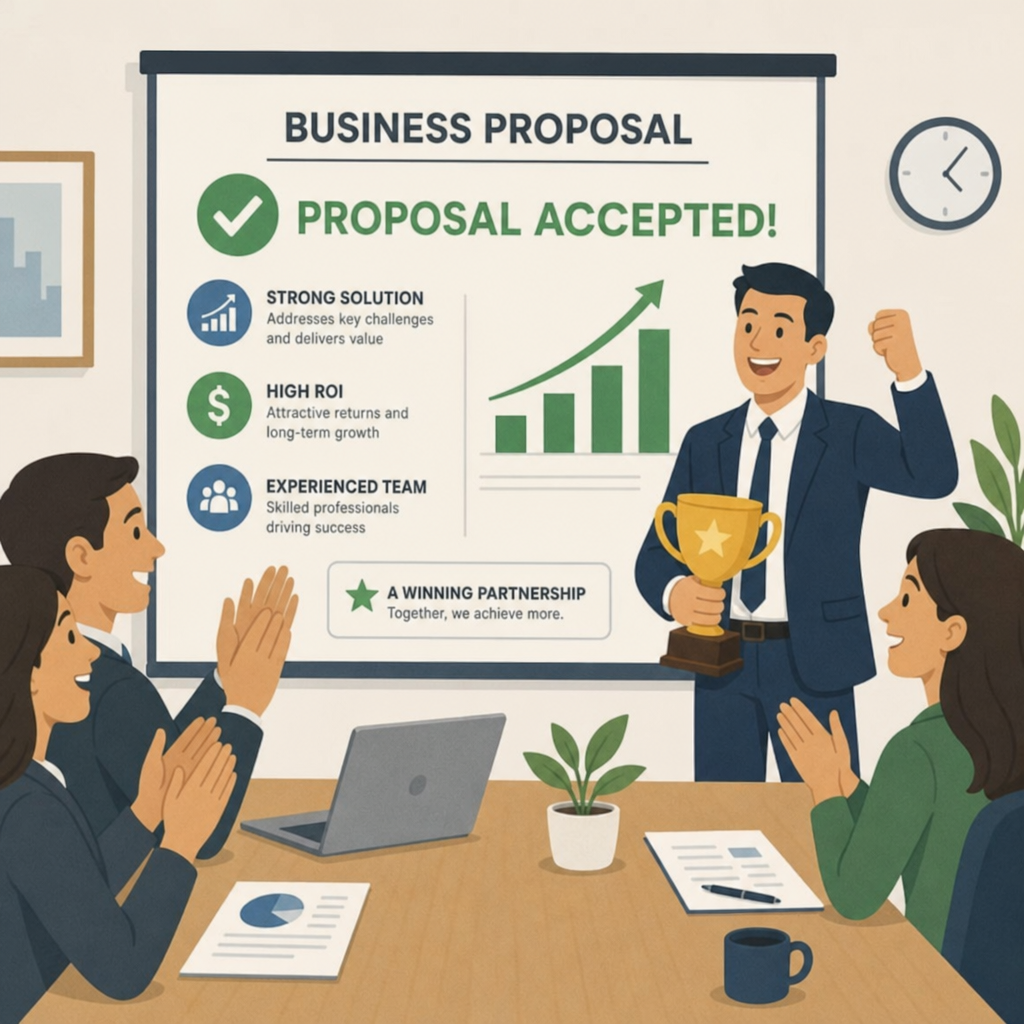
Crafting an Effective Business Proposal Template
Creating a business proposal can be daunting. Yet, it’s a crucial step in securing new clients or investments.
A well-crafted proposal can set you apart from competitors. It showcases your understanding of the client’s needs and your ability to meet them.
This guide will help you craft an effective business proposal template. You’ll learn about key elements, formats, and customization for different industries.
Whether you’re an entrepreneur or a freelancer, mastering proposal writing is essential. It can significantly boost your chances of success.
Let’s dive into the art of proposal writing and elevate your business strategy.
What Is a Business Proposal and Why Does It Matter?
A business proposal is more than a document. It’s a powerful tool designed to persuade potential clients or investors to engage in a business transaction. Unlike a business plan, which outlines overall business goals, a proposal focuses on a specific opportunity.
The significance of a business proposal lies in its ability to communicate value. It showcases how your solution can address the client’s problem effectively. This clarity and focus can make the difference between winning a contract or losing out to competitors.
Every business proposal should contain several key components:
- Introduction: Briefly outline the purpose and context.
- Problem Statement: Clearly define the client’s challenge.
- Proposed Solution: Present how you can address the issue.
- Qualifications: Highlight your expertise and past successes.

Investing time in crafting a solid proposal can lead to greater client trust and increased business opportunities. It aligns with overall business strategy, making your offerings irresistible.
Key Elements of a Winning Business Proposal
Crafting a compelling business proposal requires attention to several crucial elements. Each part plays a role in persuading the reader and reinforcing your credibility. Without these, the proposal may fail to capture interest.
The executive summary is the first impression. It should concisely summarize the entire proposal, capturing the reader’s attention. This section is often the deciding factor for further reading.
A clear problem statement identifies what the client is facing. It should resonate with the reader, showcasing an understanding of their needs. This part sets the stage for your proposed solution.
Your proposed solution should be detailed yet easy to understand. Highlight the benefits and advantages of choosing your approach over others. Ensure the solution aligns with the client’s business goals.
Include a section on qualifications and past successes. Demonstrating expertise builds trust and credibility. Use relevant examples from past projects to strengthen your case.
Here’s a visual representation of key proposal elements:

A winning proposal is well-researched, client-focused, and professionally presented. It combines persuasive language with strong evidence, leading to successful outcomes.
Choosing the Right Proposal Format
Selecting the right proposal format is vital for clarity and organization. A well-structured format helps communicate your ideas effectively. It allows the reader to follow your argument with ease.
Different industries may require specific formats. Understanding these nuances can improve the proposal’s impact. Adapt the proposal format to fit the expectations of the target audience.
Here are some common components in many proposal formats:
- Title Page: Includes title, company name, and submission date.
- Table of Contents: Lists sections and page numbers.
- Body: Contains introduction, problem, and solution.
- Conclusion: Summarizes key points and presents a call to action.
Choosing an appropriate format enhances readability and professionalism, crucial for catching and keeping the reader’s attention.
Step-by-Step Guide to Proposal Writing
Writing an effective business proposal involves several key steps. Each step plays a crucial role in shaping your document. Begin with thorough research to understand the client’s needs.
Next, craft a compelling introduction. Highlight the client’s pain points and how your proposal addresses them. Make this section engaging and relevant.
Follow with a detailed explanation of the problem. Clearly define the issue your solution will tackle. Use data and research to back your statements.
After defining the problem, present your solution. Explain how it effectively addresses the client’s challenges. Be precise and detail-oriented in this section.
Outline your qualifications to build trust. Showcase your experience and expertise. Include testimonials or case studies to boost credibility.
Now, create a clear timeline. Outline the steps and timeline for implementation. This helps set realistic expectations for both parties.
Finally, include pricing details. Be transparent about costs to avoid surprises. Offer different pricing options if applicable.
Here’s a concise list to guide your proposal writing process:
- Conduct client and market research.
- Write a compelling introduction.
- Define the problem with supporting data.
- Present a detailed solution.
- Highlight qualifications and experience.
- Outline timeline and milestones.
- Provide transparent pricing options.

Each step enhances your proposal’s persuasiveness. Investing time in these stages can significantly increase your chances of success.
Customizing Your Proposal Template for Different Industries
Each industry has unique needs and challenges. Tailoring your proposal template to fit these specifics can make your pitch more effective. Whether in ice cream shops or car rentals, customization is key.
Start by identifying industry-specific concerns. For an ice cream shop, focus on seasonal trends. A car rental business may emphasize fleet variety and customer service.
Next, adapt language and visuals. Use jargon relevant to the industry. This shows clients you understand their world. Visuals should also reflect industry themes.
Additionally, adapt your value proposition. Highlight what makes your solution special for that industry. This can make your proposal stand out.
Here’s a quick checklist for industry customization:
- Identify industry-specific concerns.
- Use relevant language and visuals.
- Highlight industry-specific value propositions.

Tailoring your proposal increases its impact. It shows attention to detail and understanding of the client’s world.
Business Proposal Examples: Ice Cream Shop, Car Rental, Lawn Care, Cleaning
Examples can provide valuable insights into crafting proposals. Each industry has distinct focuses and strategies. Let’s explore some examples.
For an ice cream shop, emphasize location and product range. Highlight target demographics and potential for seasonal promotions.
A car rental proposal might focus on fleet size. Include customer loyalty programs and competitive pricing strategies.
In the lawn care industry, discuss service scope and reliability. Highlight seasonal offerings and customer satisfaction metrics.
Cleaning business proposals should detail service packages. Focus on client testimonials and flexible scheduling options.
Here’s a brief list of focus areas by industry:
- Ice Cream Shop: location, demographics, seasonal promotions.
- Car Rental: fleet size, loyalty programs, pricing.
- Lawn Care: service scope, seasonal offerings, reliability.
- Cleaning: service packages, client testimonials, flexibility.

Understanding these specifics helps craft more effective proposals. Tailored examples demonstrate your grasp of industry needs.
Enhancing Your Proposal: Visuals, Branding, and Professional Touches
Adding visuals can significantly enhance your proposal’s impact. Charts and infographics make data easy to understand. They draw attention and break up text-heavy sections.
Branding is also crucial. Ensure your proposal reflects your company’s image. Use consistent colors, fonts, and logos to create a cohesive look. This attention to branding details conveys professionalism.
Don’t overlook the professional touches. Proofread your document meticulously. Mistakes can undermine credibility. Also, consider the layout’s readability. Well-structured content keeps the reader engaged.
Here’s how to enhance your proposal:
- Use visuals like charts and infographics.
- Incorporate consistent branding elements.
- Proofread and ensure a readable layout.

These strategies can elevate your proposal from good to great. They enhance readability and reinforce your professionalism.
Common Mistakes in Business Proposal Writing (and How to Avoid Them)
Mistakes in proposal writing can hurt your chances. One common error is using generic content for every client. Tailoring proposals to specific needs is crucial for effectiveness.
Another mistake involves overloading with jargon. Complex language can alienate the reader. Clear, simple language is more engaging and impactful.
Finally, many proposals lack a clear call to action. Without guiding the client on next steps, the proposal loses its purpose.
Key Mistakes to Avoid:
- Using generic content
- Overloading with jargon
- Lacking a clear call to action
Avoiding these pitfalls can make your proposal more compelling and persuasive.
When to Use Business Proposal Writing Services
Sometimes, hiring professional writing services is wise. If you’re short on time or lack the expertise, these services can be invaluable. They bring experience and polish to your proposal, enhancing its overall quality.
Consider using writing services when facing high-stakes situations. A winning proposal might require specialized knowledge that professionals provide. They can help present your ideas clearly and persuasively.
When to Consider Writing Services:
- Short on time
- Lack of expertise
- High-stakes proposal
Business Proposal vs. Business Plan vs. Business Pitch
Understanding the differences among a business proposal, a business plan, and a business pitch is crucial. Each serves a unique purpose and has a distinct format. Knowing when to use each one can enhance your business strategy.
A business proposal targets specific opportunities and aims to secure agreements or funding. A business plan outlines the overall strategy and operations of the company. A business pitch, often verbal, seeks to quickly engage stakeholders, covering key highlights and leaving room for discussion.
Key Differences:
- Business Proposal: Specific opportunity focus
- Business Plan: Comprehensive company overview
- Business Pitch: Engaging verbal presentation
Frequently Asked Questions About Business Proposals
Many individuals have questions about crafting effective business proposals. Let’s address some common queries. Understanding these can help streamline your proposal writing process.
Common Questions:
- How long should a business proposal be?
- What is the typical proposal format?
- How can I make my proposal stand out?
- Should I include visuals in my proposal?
Conclusion: Take Your Proposal Writing to the Next Level
Crafting an effective business proposal is a skill that can be honed with practice. By understanding your audience’s needs and presenting clear, tailored solutions, your proposals will shine. Remember, attention to detail can make or break your presentation.
Don’t hesitate to use templates, but always customize them to fit the client’s specific context. This personal touch can significantly enhance engagement and the proposal’s success rate. Incorporating feedback and continuously refining your approach is key.
Lastly, consider professional writing services if you find yourself short on time or expertise. Investing in a polished proposal can lead to lucrative business opportunities and strengthen your professional reputation.
